


Simple, science-backed habits to protect your spine from the moment you wake up to the moment you wind down.
Spinal health is not something you address once and forget. It is built through small, consistent habits practiced morning, noon, and night. As a chiropractor with over 28 years in practice, I have found that the patients with the least pain and the most mobility are the ones who follow a daily rhythm of hydration, movement, and recovery. Below is the exact routine I recommend to my own patients, along with the products I trust to support it.
Morning: Rehydrate and Reset
After a full night's sleep, your body wakes up dehydrated, and your spinal discs are no exception. Start your day with one to two glasses (8 to 16 ounces) of water. This replaces fluids lost overnight and helps rehydrate the muscles, tendons, and ligaments that support your spine.
Choosing the Right Mattress for Spinal Support
I am often asked what mattress I recommend for better sleep and less back pain. After nearly three decades in practice, my answer is consistently the Tempur-Pedic LuxeBreeze Mattress with Adjustable Base. A few reasons it stands out:
-
Advanced cooling technology, including PureCool+ material and a ventilated, breathable design
-
A soft-medium hybrid feel in a 13-inch profile
-
Proprietary TEMPUR material, originally developed by NASA, that conforms precisely to the body to relieve pressure points
-
1,300 premium innersprings, double-stacked for a more responsive feel and a deeper night's sleep
The Right Pillow Matters Just as Much
Alongside the right mattress, I recommend the Technogel Back and Side Pillow. Engineered with advanced 3D gel technology, it delivers targeted neck support and promotes natural spinal alignment to relieve pain and stiffness. Its gel-infused surface disperses excess heat and moisture, so you stay cool, dry, and comfortable through the night.
A Morning Stretch Routine for Spinal Decompression
Once you are up and hydrated, a short morning stretch routine goes a long way. I recommend the Kanuda Spine Nap, a chiropractic-style device that gently tractions and decompresses the cervical and thoracic spine. Used for 20 minutes each morning, it relaxes soft tissue, eases strain on the neck, shoulders, and upper back, and supports the kind of spinal alignment that improves mobility and counters the effects of poor posture.
Standing stretches:
-
Side body reach: Stand tall, reach your arms overhead, and gently lean to one side. Hold for 15 to 30 seconds, then switch sides.
-
Standing hamstring stretch: Place one heel out in front of you with a straight leg, hinge at the hips, and lean forward gently for 30 seconds per side.
-
Arm circles: Roll your shoulders and circle your arms forward and backward five times to loosen tight shoulders.
Bed or floor stretches:
-
Knees-to-chest: Lie on your back, pull one or both knees to your chest, and hold for 30 seconds to release lower back tightness.
-
Spinal twist: Lie on your back, drop your knees to one side while keeping your shoulders flat, and hold for 15 seconds per side.
-
Cat-cow: On hands and knees, arch your back toward the ceiling, then lower your belly while looking forward. Repeat for 60 seconds.
-
Child's pose: Spread your knees wide, sit your hips back onto your heels, and reach your arms forward on the floor. Hold for 30 seconds.
Throughout the Day: Small Habits, Big Impact
Good posture is not a one-time fix. It is maintained through small adjustments repeated all day:
-
Stand up or walk for a minute or two every 30 to 60 minutes.
-
Keep your computer screen at eye level with your feet flat on the floor.
-
Hold your phone near eye level instead of looking down into your lap.
-
Keep your core gently engaged while walking to support your lower back.
Evening: Recover and Unwind
After a full workday and the commute home, it is time to recover. Start with hydration again: two glasses of water, at least 8 ounces each. If your back feels stiff or your body feels tense, repeat the morning stretch routine.
Unwind in a Massage Chair
Next, spend 20 minutes in a massage chair such as the Cozzia Quantum. The benefits compound with regular use:
-
Stimulates circulation, moving blood and oxygen to tired muscles
-
Eases chronic stiffness and lower back and shoulder tightness
-
Decompresses the spine and supports realignment over time
-
Lowers cortisol while boosting serotonin and dopamine
-
Helps the body relax and wind down for better sleep
-
Clears mental fatigue and eases daily stress
End the Day in a Zero-Gravity Chair
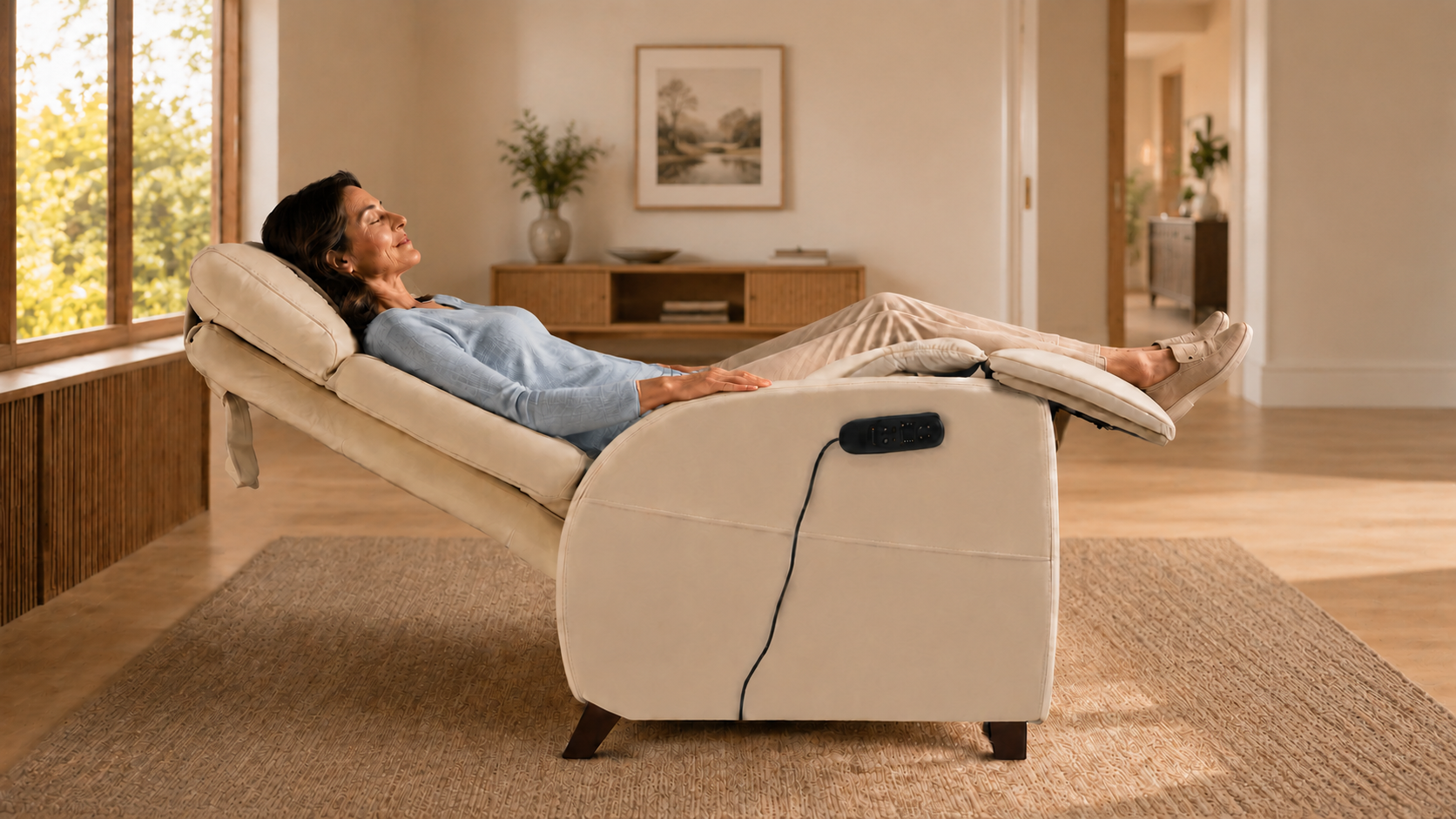
Finally, close out your evening in a zero-gravity chair such as the Vesta ZG Chair. Elevating your legs above your heart mimics a neutral, weightless posture that reduces spinal pressure, improves circulation, and eases muscle tension while distributing your weight evenly across the body.
The physical benefits include:
-
Spinal decompression, relieving pressure on the lower back and vertebrae so spinal discs can expand and rehydrate
-
Improved circulation, as leg elevation supports blood flow back to the heart and reduces cardiovascular strain
-
Reduced swelling, by limiting fluid buildup in the lower legs and easing symptoms of edema and varicose veins
-
Muscle relaxation, as even weight distribution allows tight back and neck muscles to release
-
Posture support, thanks to the natural 127-degree recline angle that echoes the spine's natural curve and helps correct slouching
The Takeaway
A healthy spine is not built in a single visit to the chiropractor. It is built daily, through hydration, mindful movement, supportive sleep products, and intentional recovery time. Small habits, repeated consistently, are what protect your back for the long run.


