


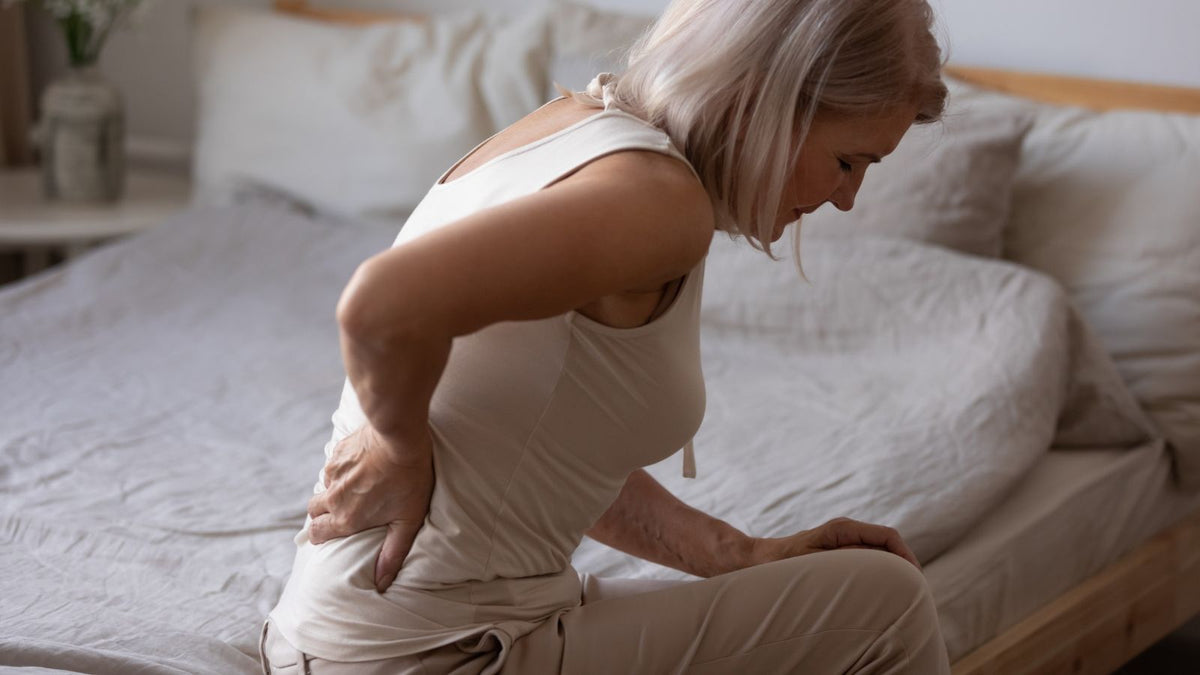
That is what I want to say every time someone tells me this is what getting older feels like.
And I get it. I have said it myself. When your hip aches before you are out of bed. When you dread sitting down because you already know how it will feel to stand back up, when the body that used to work starts announcing itself at every turn, it feels exactly like getting older.
More often than not, it’s something else entirely. And that something else has a name.
It’s posture. And posture, unlike age, is something we can actually change.
October is Healthy Spine Month, and World Spine Day is October 16th. I could write an encyclopedia about alignment, ergonomics, and the importance of neutral posture.
But I think I’ll tell you a story instead.
I was in my early forties, taking a step class, feeling good about myself, when at the end of class I couldn’t stand up. Not stiff. Not sore. Spasms. The kind that takes your breath away, leaves you afraid to move, and makes you wonder how you’re going to get to your car.
That was the beginning of a time I'd rather not think about.
Months of PT. Doctors. MRIs. Praying for a diagnosis because at least a diagnosis would mean someone knew what was happening. I came to terms with the fact that I would never go upstairs to bed at night with the rest of the family. I wouldn't get to play on the floor with the kids. No skiing. No step class. None of it. A military move led to three more years of the same pain in a different zip code.
I eventually found my way to a neurosurgeon who ordered full X-rays in multiple positions. It was painful, but I was hopeful. And good news! She saw something no one else did. A rotated pelvis due to favoring one side when I stood, sat, or slept. Think step class and always leading with the right foot! One quick adjustment and I was pain-free.
I know better now. I know what I did not know then. And yet I still catch myself doing the things I tell others not to do and crossing my legs. Sleeping on a surface that stopped fitting me when my body changed. Sitting on a couch that fights better posture. And blaming the pain when I should be looking at the setup.
That is what posture actually means—not sitting up straight and getting your surroundings to stop working against you.
Here is what I want you to take from this. What you’re feeling may not be age. It may not be genetics. It may not even be an injury. It may simply be your posture. And posture is something we can work with.
A quick self-check. Start here.
- Has your routine changed recently? A new job, a new hobby, working from home, sitting more, moving less. Your body didn’t get the memo.
- Has your weight changed? Even a little. The surface that fit you last year may not be fitting you the same way now.
- Did you stop doing something you used to do? A workout, a walk, a weekly class. Movement may have compensated for something your setup wasn’t doing. When the movement stopped, the setup stayed the same.
- Do you favor one side? One leg you lead with. One arm you reach with. One hip you lean on. Over years, that preference becomes a pattern. And the pattern becomes pain.
- Are you sleeping the same way you always have on the same surface you always have? Your body changes. Your setup usually does not.
None of these are genetics. None of these are age. These are habits. And habits can be adjusted.
Where to start.
You don’t need a diagnosis to start paying attention. You need to notice when the discomfort shows up and what you were doing in the hours before.
Morning stiffness that eases through the day is almost always a sleep story. Pain that builds through the workday is almost always a sitting story. Discomfort that arrives at the end of the day is almost always an accumulation story.
Start with one of those. Come in and tell us which one. We will ask the right questions and help you figure out where to look.
And if you’ve been managing pain for a while, the way I managed mine for years, please do not wait as long as I did to ask someone to look at it differently.
With appreciation and a very personal understanding of what you might be going through.


