


Let’s be honest. Most people walk past a Relax The Back store and think one of two things:
“Those chairs look comfortable.”
Or…
“That’s probably way outside my budget.”
Then they keep walking.
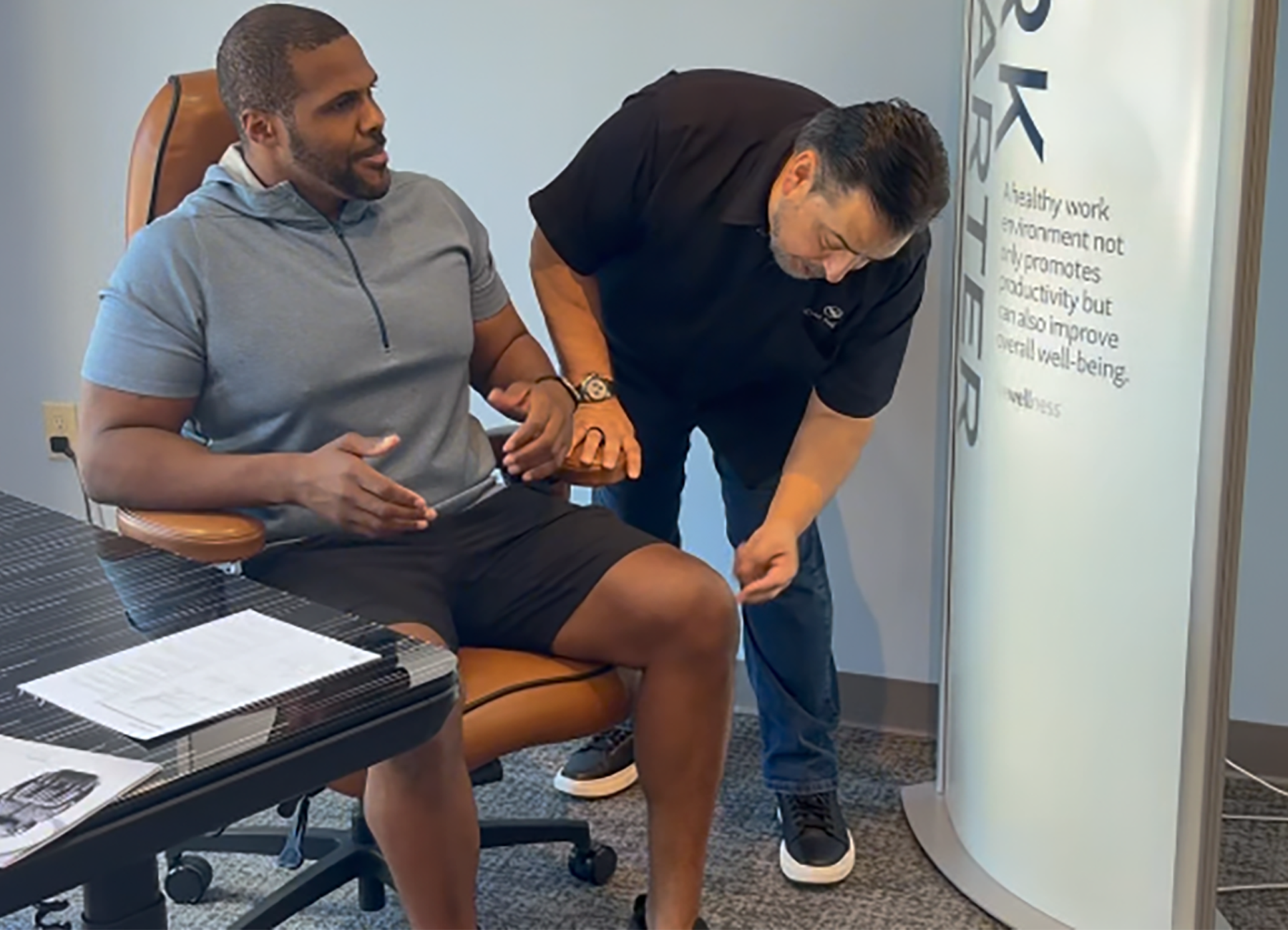
I get it. Before partnering with Relax The Back, I probably would have assumed the same thing. But after spending time inside the stores and seeing how the wellness assessments actually work, I realized something: this isn't a furniture store experience.
It's much closer to a coaching session. As a coach myself, that's what immediately stood out.
It Doesn’t Start With “Can I Help You?”
Think about the last time you walked into a retail store. Someone greets you and asks, "Can I help you find anything?" You politely say no, they step away, and you spend the next few minutes doing the awkward browsing dance we've all experienced.
A wellness assessment starts differently.
One of the first questions you'll usually hear is, "Is this your first time visiting Relax The Back?" It sounds simple, but it completely changes the direction of the conversation. Instead of asking what you're looking to buy, the team wants to understand who you are and what brought you in.
That's the first thing I noticed.
The pressure immediately drops because no one is trying to sell you a chair. They're trying to understand how your body feels throughout the day and where you might need more support.
The Question Nobody Expects
As the conversation continues, you'll hear another question that surprised me the first time I heard it:
"What part of your day are you trying to improve?"
Notice what they don't ask. They don't start with your budget. They don't ask which recliner you've been looking at or whether you're shopping for a mattress. Instead, they ask about your daily life.
Maybe your lower back starts aching after a full day at your desk. Maybe your neck feels stiff every morning, your hips hurt during your commute, your feet become numb after sitting for too long, or you can't find a comfortable position to sleep.
Most people know what hurts. Very few have stopped to think about when it hurts.
That small shift in perspective often uncovers the real source of the problem.
You’re Not Shopping. You’re Problem Solving.
This is the point where the experience started reminding me of coaching.
If a client walks into the gym and says, "Dane, my back hurts," that's not enough information for me to help them. I need to know when it hurts, what they're doing when it happens, how often they experience it, whether they've been diagnosed with anything, and what makes it feel better or worse.
A wellness assessment follows that same mindset.
The team asks thoughtful questions that help connect the dots between your discomfort and your everyday habits. They might look at your posture, workstation setup, sleep position, recovery routine, or how you move throughout the day. Because more often than not, the place you feel pain isn't actually where the problem begins.
That's what makes the experience feel less like shopping and more like problem solving.
The Goal Isn’t Always a Bigger Solution
This was probably the biggest surprise for me.
Most people assume they'll be shown the most expensive product in the building. In reality, the recommendation is often much simpler than they expect.
Sometimes it's a foot rocker. Sometimes it's a seat cushion, a small adjustment to your monitor height, or a pillow that's actually designed for the way you sleep.
Could the right solution be a massage chair or an ergonomic recliner? Absolutely.
But sometimes the biggest improvement comes from a much smaller change.
That's what impressed me most. The assessment isn't built around finding the biggest purchase. It's built around finding the solution that's most likely to improve how you feel every day.
Looking at Your Entire Day
One concept I really appreciated was the team's ability to think beyond a single moment of discomfort. They look at your entire day because your body doesn't exist in isolation.
You spend hours working, driving, relaxing, exercising, and sleeping. Each of those moments affects the next.
If your posture breaks down during an eight-hour workday, then you spend your commute slouched behind the wheel, and later sleep in a position that doesn't allow your body to recover, you're asking your body to fight the same battle for 24 straight hours.
Instead of focusing on a single piece of the puzzle, the wellness assessment looks at how everything fits together. The goal is to identify where small improvements throughout your day can create meaningful changes over time.
It’s About Building Your Wellness Cockpit
One idea that really stuck with me was the concept of creating an ergonomic "cockpit."
Think about a Formula One driver. Every control is intentionally placed. Every movement is efficient. The environment is designed to support performance while reducing unnecessary strain.
Why shouldn't your workspace be built with that same level of intention?
Why shouldn't your favorite chair help your body recover?
Why shouldn't your sleep environment support better rest instead of working against you?
The goal isn't perfection. It's about creating spaces throughout your day that support your body rather than adding more stress to it. When your environment works with you instead of against you, it's easier to move well, recover well, and feel your best.
The Real Outcome
Most people walk into Relax The Back expecting to see products.
What they leave with is education.
They leave with a better understanding of why they're uncomfortable, which daily habits may be contributing to the problem, what changes could make a difference, and how to support the work they're already doing with their chiropractor, physical therapist, or physician.
That's why the experience feels different.
It isn't about selling furniture.
It's about helping people feel better by understanding how they move through their day and finding solutions that fit their lifestyle.
Sometimes that starts with a chair. Sometimes it starts with a pillow. Sometimes it's simply a better understanding of what's been causing the discomfort in the first place.
But it almost always starts with one simple question:
"What part of your day are you trying to improve?"
Because once you know the answer to that question, finding the right solution becomes a whole lot easier.
About Dane Robinson
Dane Robinson is a Certified Personal Trainer, former collegiate and professional football player, speaker, coach, and member of the Relax The Back Wellness Council. Through his work in fitness, recovery, and performance, Dane helps people apply athlete-inspired wellness strategies to improve how they move, feel, and perform in everyday life.


